3、任意两个苗床之间可产生0.6m-0.8m宽的作业通道。
Mobile seedbed is mainly used in greenhouse flower seed cultivation, vegetable seedling raising, rice seedling raising, flower breeding, grass planting, potted landscape cultivation, Chinese herbal medicine seedling raising, etc., which is one of the indispensable equipment in modern agriculture.
It is characterized by moving seedbed
1. It is generally used for flower seed production, vegetable seedling tray breeding, scientific research greenhouse, flexible use and rapid turnover.
2. The planting operation is convenient, and the anti overturning device is designed to avoid overturning.
3. A 0.6m-0.8m wide working channel can be generated between any two seedbeds.
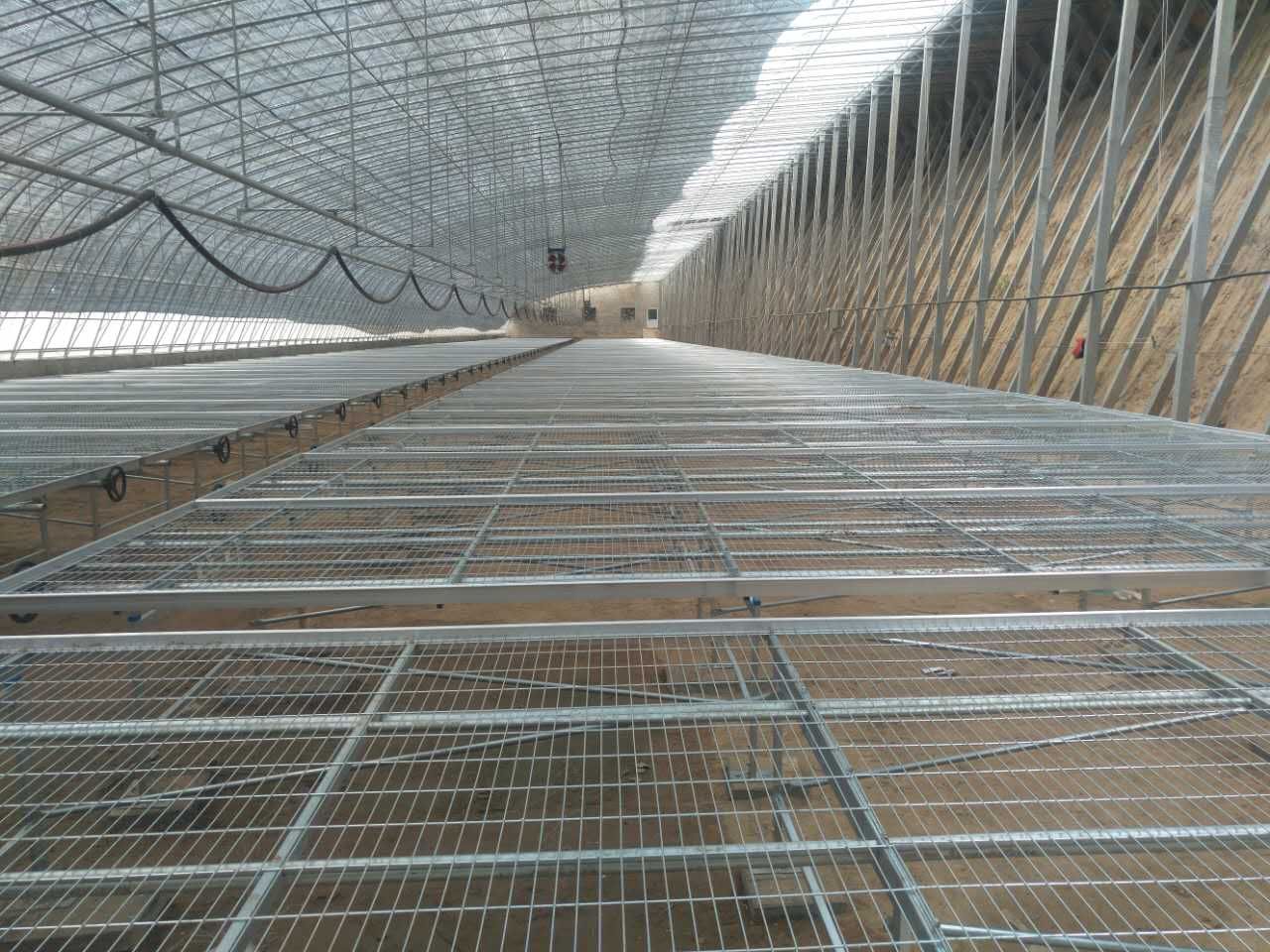
4、可左右较长距离移动,可以对高度方向进行微调,将温室的有效空间利用提高到80%以上。
5、移动式苗床还具有网面平整,焊接牢固,承重性好,尺寸准确,安装施工方便,耐用抗腐蚀的优点。
6、美观大方,经济实用,耐腐蚀,抗老化,耐酸碱,不退色。
移动苗床的优点:
1、美观大方,有很好的视觉效果。
2、改善了温室内部的层次结构,大大提高温室空间使用率。
3、可灵活移动在任意两苗床之间形成600~700mm的通道作业方便,在一定程度上提高了工作效率。
4、抬高了作物和地面之间的距离,有效的避免和降低了作物病虫害的发生。
4. It can move for a long distance from left to right, and can fine tune the height direction, which can increase the effective space utilization of greenhouse to more than 80%.
5. The mobile seedbed also has the advantages of smooth mesh surface, firm welding, good bearing capacity, accurate size, convenient installation and construction, durability and corrosion resistance.
6, beautiful and generous, economical and practical, corrosion resistant, anti-aging, acid and alkali resistant, no fading.
Advantages of moving seedbed:
1. Beautiful and generous, with good visual effect.
2. The hierarchical structure of greenhouse was improved, and the utilization rate of greenhouse space was greatly increased.
3. It can move flexibly and form a channel of 600-700mm between any two seedbeds, which is convenient for operation and improves work efficiency to a certain extent.
4. Raising the distance between the crop and the ground, effectively avoiding and reducing the occurrence of crop diseases and insect pests.


